
By Emily Ashman. Emily is a journalist and blog contributor for TedxTinHau Women.
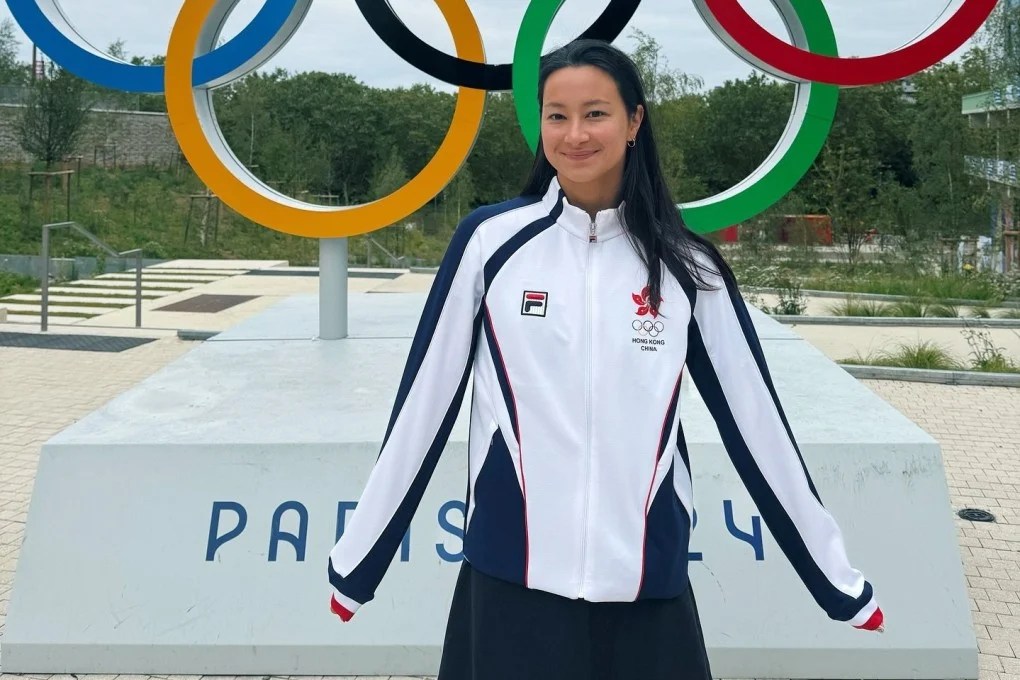
Three-time Olympian Camille Cheng doesn’t do regular holidays. When we catch up, she’s calling me from Ireland. Instead of hitting a beach to decompress from her demanding training schedule, she’s decided to drop herself into a highly intense farm-to-table cooking course. While most people run from the discomfort of being a beginner, she seems to run toward it with an insatiable curiosity.
The Art of Being a Beginner
Eighteen months ago, fresh from the Paris Olympics, Camille was in a chapter of life where she truly deserved a break. Instead, she chose to audition for TEDxTinHau Women. She was totally new to public speaking, yet she stepped onto the stage to deliver a powerfully honest talk about imposter syndrome and overcoming limiting beliefs.
Now, she’s leaning into the unknown yet again by learning to cook.
“I’ve been in swimming for over twenty years,” Camille shares. “It’s been a long time since I’ve been in an environment where I’m completely out of my comfort zone.”
In Ireland, she faces a new kitchen, new teachers, and a new cooking partner every single week. For a world-class athlete used to a perfect, military-style routine, this intentional chaos is humbling. “At first I was constantly second-guessing myself,” she says. “I kept asking endless questions and comparing myself to the other students.”
But instead of letting that discomfort trigger a crisis of confidence, she acknowledged the fear and embraced the exhilaration of being a beginner.
“The kitchen doesn’t know I’m an Olympian,” she laughs. “And I actually love that.”
Redefining the Slump
When athletes finish an Olympic cycle, they frequently face a profound “post-Olympic slump”—a loss of identity once the grand goal is met. Camille experienced this low after her first Olympics in 2016 in Rio de Janeiro. “I nearly quit,” she confesses. “I didn’t have the language to express what was going on for me and I felt very alone.”
Slowly, she started opening up about her struggles and realised this post-Olympic lull was common not just among athletes, but among us all. “We all have periods where we work towards a big moment in life,” she says. “So we also all experience the confusion and readjustment that comes after that moment has passed.”
Camille’s response to this slump defines her unique approach to life. She realised she had to remain open to the unknown, explore new skills, and deliberately cultivate an identity outside of “Camille the swimmer.” Where others see a terrifying void after retirement, she sees a blank canvas, approaching her next chapter with an inspiring blend of vulnerability and bravery.
The TEDxTinHau Women audition served as her creative outlet to learn the mechanics of storytelling and apply her high-performance mentality to a totally different challenge. When I ask her what is more nerve-wracking—standing on the blocks preparing to race in the Olympics or standing on the edge of the TEDx stage—she laughs, momentarily stumped.
“It’s a similar feeling but a very different context,” she says after a pause. “I felt well prepared for both, but with swimming, because I’d been doing it for a lot longer, there was this greater level of confidence. Whereas the TEDx talk was the first time I’d spoken like that to a huge audience, so it was a different level of nerves. If you’d asked me ten years ago if I’d ever do something like that, I’d have said
absolutely not!”
Embracing the Unknown
Camille quickly realised that preparing for her speech was remarkably similar to preparing for a big race: hours and hours of pure repetition. “Every day, I would go to the park and rehearse my talk in front of whoever was there,” she recalls.
When Camille talks about preparation, it is on a level most of us can barely comprehend. Her face lights up when she describes practising new skills over and over until she masters them. This is her true Olympic mindset: it isn’t just about being an incredible athlete; it’s about being incredible at the preparation itself.
That meticulous groundwork is what allows for a total flow state when the pressure hits. “It was the same with some of my best races,” she reflects. “You’re so focused you can’t remember the details afterwards. It all just happens and you walk away with a feeling.”
That feeling, it seems, is addictive, and it is something incredibly difficult to replicate outside of high-stakes performance. So what do you do when the athletic career inevitably winds down?
“I always say it’s like a blessing and a curse to have found something so young that I’m so passionate about, but that unfortunately has an expiration date,” she says.
Many in her position try to force a perfect one-to-one replacement for their first passion, embarking on a desperate search for a career that feels exactly like swimming. Camille has the bravery to drop that expectation entirely. Instead, she is choosing to trust the unfoldment of life.
“Initially, I needed a plan, I needed structure,” she says, reflecting on her shift in mindset. “But I think now I’m a lot more comfortable with the uncertainty. I’m in a place where I’m trusting that things will kind of unfold as they do.”
Camille Cheng’s true “Olympic mindset” isn’t about winning medals; it’s about her fearless willingness to start at zero, over and over again, guided purely by curiosity.
I can’t wait to see what she does next.
Join the conversation on 2 October at Xiqu Centre.
- Watch Camille’s TEDxTinHau Women Talk here → Camille Cheng – Bringing an Olympic Mindset to Life
- Listen to the full interview as a podcast on Spotify above or here → Camille Cheng

